

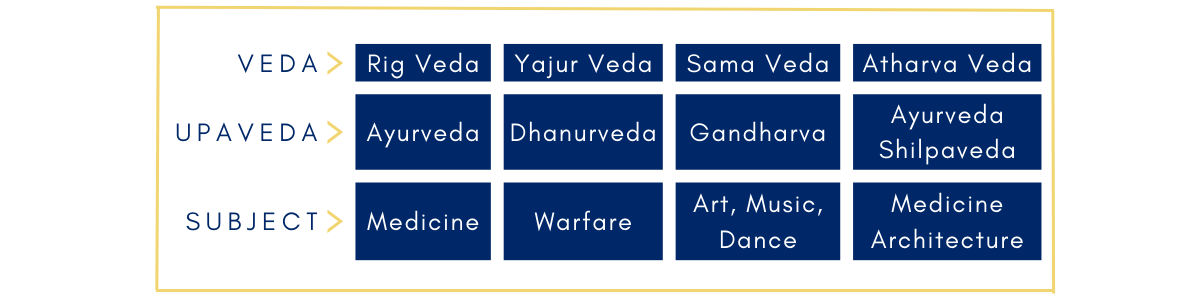
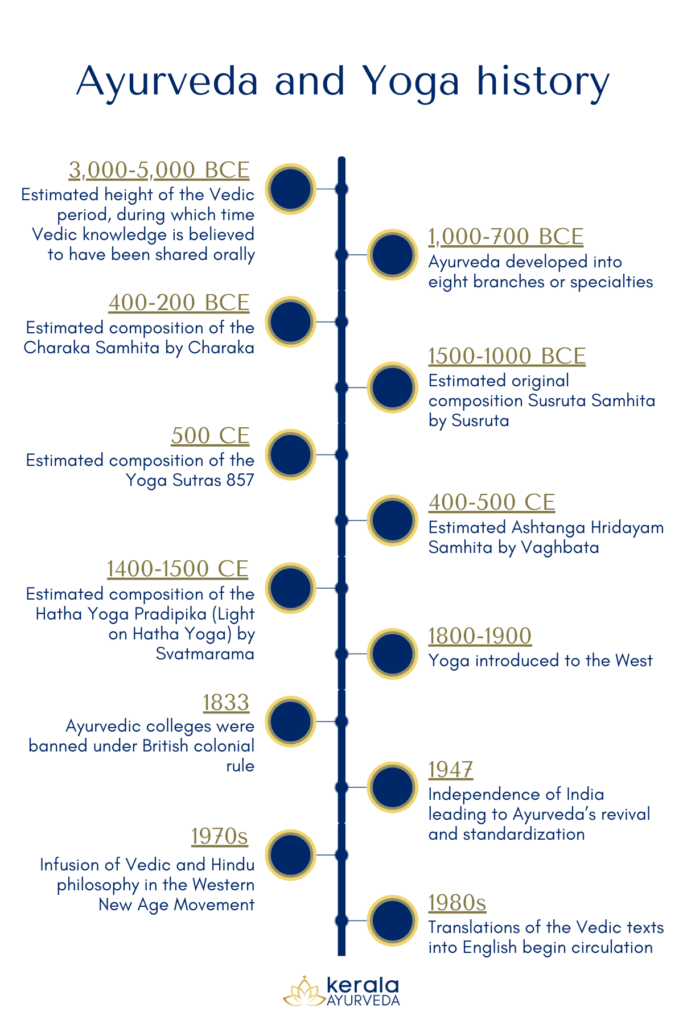
The history of Yoga and Ayurveda
About Author


Reset Your Metabolism for Autumn
Why Ayurvedic Fall Rejuvenation is Better Than a Fasting Cleanse
As the leaves change and the air cools, many of us feel a natural urge to reset. W...
3-4 minutes
9/8/2026

Read More

Your Home Has a Constitution, Too | Ayurveda & Vastu
You likely already know your constitution — the unique elemental character that shapes your digestion, your sleep, your emotional tendencies, and y...
08/25/2026
Read More

There Isn't One Right Path
Discover where your Ayurveda journey could lead.
You’ve taken your first step with Ayurveda. Where you go from here is entirely up to you.
For some...
August 19, 2026
Read More

5 Signs Your Environment May Be Affecting Your Wellbeing
When we think about what shapes our health, we tend to look inward — at our diet, our sleep, our stress levels, our daily routines. And rightly so....
07/14/2026
Read More

Why Your Home May Be the Missing Piece in Your Wellness Journey: The Ancient Science of Vastu
You follow a carefully chosen diet. You practice yoga and meditation. You take your herbs, honor the rhythms of daily practice, and tend to your in...
06/17/2026
Read More

Journey to the Heart of Ayurveda: What It Means to Learn Where It All Began
Imagine standing in a lush herbal garden on the banks of the Periyar River, surrounded by over 1,000 plant species, some of which are rare and near...
April 7, 2026
Read More

Connecting Ayurveda and Yoga To Create The Ideal Practice
If you’ve practiced Yoga, you’ve already touched the roots of Ayurveda—whether you realized it or not. These sister sciences are like tw...

Read More

Ayurveda Tips for the New Year: A Heart-Centered Guide to Wellness
As we welcome another year, Ayurveda invites us to reset - not with drastic resolutions, but with sustainable lifestyle habits that support ...

Read More

Yoga nidra: a self-healing technique
Yoga Nidra is a simplified version of Tantric kriyas, or movements, designed by Swami Satyananda Saraswaty. It is, simply put, a state of dy...

Read More

Allow your breath to warm you: Surya Bhedana Pranayama
Allow your breath to warm you: Surya Bhedana Pranayama
Surya Bhedana
is...
Read More

15 ways Ayurveda can change your life
Ayurveda is a 5,000 year-old system and still thriving today. Why? It works!
If you’re already a student of Ayurveda, you know first-hand how th...
Read More

Kadha: an Ayurvedic immune-boosting drink
Kadha is an Ayurvedic drink including herbs and spices which are typically boiled in water for a length of time, allowing all of the medicinal...
Read More

Four steps to releasing obstacles and embracing change
Four steps to releasing obstacles and embracing change
Change brings uncertainty, a...
Read More

Subtle shifts for living life abundantly
According to some traditions, the key to abundance lies in the mind, which may give the impression that it is simply a matter of how one think...
Read More

The Ayurvedic approach to cleansing: mind, body and spirit
Springtime is when we plant the seeds in our gardens outdoors. To prepare for the year’s crops, we first clear out the soil beds to receive ne...
Read More

Khichadi: the gentle detox meal for all seasons
Khichadi: the gentle detox meal for all seasons
Khitchadi (also referred to as kich...
Read More

6 signs it’s time to cleanse
Towards the end of winter and beginning of spring, there may be a general feeling of heaviness, or slowness in the body. This is known as the ...
Read More

Strengthen your system for autumn
As autumn approaches it brings a unique energy to the pace of life – kids are back to school, the holiday season builds, the to do list tends ...
Read More

Ayurvedic guide to holiday eating
Ayurvedic guide to holiday eating
Some basic Ayurvedic principles and techniques ca...
Read More

Enhanced Panchakarma Technician certification program: from 50 to 250 hours
It’s an exciting time to be involved in Ayurveda! We’re thrilled at Kerala Ayurveda Academy to introduce an expanded Panchakarma Technician c...
Read More

Experiences to cherish: visiting the heart of Ayurveda and Yoga
“The plants, falling from heaven, said ‘The man, whom living we pervade, will not perish.'”
- RIG VEDA
In the summer months, the weather is wa...
Read More

12 tips for Ayurvedic professionals on how to operate during the pandemic
We are living through a unique and surreal time with the COVID-19 pandemic, grappling with a number of challenges, both personally and profess...
Read More

Vedic formulation study: 25% of an Ayurvedic practitioner’s skill set
Jivaka was Buddha’s personal Ayurvedic physician or Vaidya . He was a disciple of the great Sage Atreya. Legend goes that Atreya sent his st...
Read More

Upgrade Your Life with a Level I Ayurvedic Training
We're living in a remarkable time — decoding genomes and exploring life on distant planets — yet we continue to grapple with fundamental ques...

Read More

Amrutharishtam: Ayurveda’s herbal formulation from heaven
THE STORY BEHIND EVERY HERBAL FORMULATION IN AYURVEDA IS AS RICH AND UNIQUE AS ITS PROPERTIES. HERE’S THE STORY BEHIND AMRUTHARISTHAM, ONE OF TH...
Read More

Ayurvedic formulations: two ways to study
Kerala Ayurveda Academy offers two types of programs devoted to the important topic of herbal formulations. In this article, we explore what m...
Read More

Upskill to the level II Ayurvedic practitioner program
In a quest to be productive, we live in a stressful world. Technology and advancements ought to have made us healthier and more resilient; ye...
Read More

Ayurveda and mental health for pandemic recovery
What are the fundamental principles in Ayurveda that govern mental health? In this article, we’ll explore how the ancient wisdom guides us to...
Read More

Encouraging the Black community in Ayurveda: an interview with Dr. Tara Collins
Ayurveda is a form of traditional medicine in India and Complementary and Alternative Medicine (CAM) in the US. It has been through its own ...
Read More

Ten ways knowing your individual constitution or Prakriti can empower you
YOU’RE AT DINNER WITH A FRIEND WHO DOES JUST FINE WITH KIDNEY BEANS AND SALAD AND YOU CAN ONLY SEEM TO DIGEST LIGHT SOUPS. MEANWHILE, YOUR OT...
Read More

Tips for stepping into 2022 as uniquely you
Do not be led by others, awaken your own mind, amass your own experience, and decide for yourself your own path
- Atharva Veda
The ...
Read More

Ayurveda: an integrative and natural wellness approach
Today, more than 38% of Americans are turning to natural healthcare approaches which aren’t part of conventional medicine and are complementa...
Read More

Four steps to an Ayurvedically balanced meal
According to Ayurveda, life is supported by three pillars: food ( Ahara ), sleep ( Nidra ) and proper management of procreation ( Brahmac...

Read More

Revitalize your skin with an Ayurvedic DIY facial
In our prior blog, Ayurvedic principles for lasting beauty, we introduced you to Ayurvedic skin care theory and discussed how to begin building ...
Read More

5 tips to create an LGBTQ+ friendly wellness space
This is Pride Month and while we celebrate the LGBTQ+ (Lesbian Gay Bisexual Transgender Queer/Questioning) community, we recognize that it is ...
Read More

The Parent’s Complete Guide to Ayurveda
Kerala Ayurveda Academy is pleased to announce that our CEO and Director, Vaidya. Jayarajan Kodikannath and alumnus, Alyson Young Greg...
Read More

Traditional Ayurvedic cleansing 101
Our bodies are constantly confronted with toxins, whether they come from our environment or our own natural cellular processes, which ...
Read More

3 Ayurvedic tips for the family
We meet so many families at Kerala Ayurveda’s Academy & Wellness Center, so we’re excited that there is an easy-to-read guide on ...
Read More

Pulse assessment as a diagnostic tool
“Pulse resides on the fingertips of the Vaidya, not on the radial artery of the client–and Ayurvedic Professionals live on their fing...
Read More

Reaching the Asian & Pacific Islander community: interview with July (Su-Yen) Huang Part 2
In part 1 of this interview series , we learned about July Huang’s background studying and healing with the Vedic sciences. July als...
Read More

Finding life balance while studying Ayurveda
Choosing and committing to an Ayurvedic training program is a big decision. And while you know an exciting educational adventure awai...
Read More

Madison Madden shares her unique Ayurvedic career story
Each of us is endowed with a unique Dharma , or life purpose according to Ayurveda. This Dharma includes the bigger things we do, such as ou...
Read More

Maria Radloff on balancing Ayurveda work, other work, dogs and Vata
A conventional health practice isn’t the only professional pathway available to Ayurvedic students. In addition to the 9 ways to build a care...
Read More

Picking the right career for your Doshas
Ayurveda is best-known for its natural and holistic methods for preventing and managing imbalances through diet, lifestyle, herbal f...
Read More

Career Opportunities in Ayurveda
If you’re called to Ayurveda for professional development, there are many exciting career opportunities to explore. At Kerala Ayurveda, ...
Read More

Unleash your digestive fire for gut health
Unleash your digestive fire for gut health
...

Read More

The doshas explained
Ayurveda is one of the oldest documented medical sciences in the world. This Indian medical science dates back more than 5,000 years a...
Read More

Why I Chose the Holistic Ayurvedic Coach (HAC) Program
I didn’t wake up one morning and decide to radically change my life by enrolling in an Ayurvedic program. It wasn’t one grand epiphany but a slow s...

Read More

Integrating Ayurveda and Yoga for the Ultimate Wellness Practice
Ayurveda and Yoga are often seen as distinct practices, but in reality, they are deeply interconnected, originating from the same anci...

Read More

From Healing to Helping: Kevin’s Journey Through Ayurveda
Discover how one student turned personal transformation into a professional practice with Ayurveda.
When Kevin first encount...
Read More